Turkey Visa RequirementsFor United States passport holders
US citizens need a Turkish e-Visa to visit Turkey. The e-Visa costs $50 USD and allows up to 90 days stay within a 180-day period.
United States passport holders must apply for an electronic visa (eVisa) online before traveling to Turkey.
Apply for the Turkish e-Visa at the official portal: evisa.gov.tr. The fee is $50 USD payable by credit or debit card. Processing is typically immediate , most approvals come within minutes. The e-Visa allows multiple entries with a maximum 90-day stay within any 180-day period. Your US passport must be valid for at least 6 months beyond the e-Visa expiry date. Print or save the e-Visa confirmation to present at Turkish immigration. Do not use unofficial third-party websites charging higher fees , always use the official evisa.gov.tr.








Entry Requirements
Passport Validity
6 months beyond date of entry
Blank Pages
2 blank pages required
Multiple Entry
Allowed
Work Permitted
No - requires work visa
Required Documents
Valid US Passport
Must be valid for at least 6 months beyond the e-Visa expiry date
Turkish e-Visa
Apply at evisa.gov.tr, $50 USD, immediate approval; print or save confirmation
Proof of Onward Travel
Return or onward flight ticket out of Turkey
Valid US Passport
Must be valid for at least 6 months beyond your planned arrival date with at least one blank page
Digital Passport Photo
Recent color photo in JPEG format meeting specific size requirements (usually 35x45mm, 600x600 pixels)
Completed Online Application
Fill out the official eVisa application form on the government portal
Travel Itinerary
Detailed travel plans including dates and places you intend to visit
Proof of Accommodation
Hotel bookings, Airbnb reservations, or host invitation letter
Return or Onward Flight
Confirmed flight booking showing departure from the country
Proof of Accommodation Recommended
Hotel booking may be requested at immigration
Proof of Sufficient Funds Recommended
Bank statements or credit card showing adequate funds for your stay
Travel Insurance Recommended
Recommended coverage for medical emergencies and trip cancellation
Travel Essentials
Health & Safety
Safety Rating
Vaccinations
Hepatitis A/B, Typhoid.
Tap Water
Bottled water recommended
Safety Tips
Generally safe. Avoid border regions with Syria. Istanbul and coastal areas safe.
Money & Costs
Currency
₺ Turkish Lira (TRY)
Daily Budget (USD)
Budget: $40 · Mid: $80 · Luxury: $200+
Cards & ATMs
Widely accepted in tourist areas.
Tipping
10% in restaurants. Round up taxis.
Practical Info
Power
Type C, F, 220V, 50Hz
Driving
Right side
Emergency
Emergency: 112
Police: 155
Ambulance: 112
Fire: 110
Mobile/SIM
Buy at Turkcell, Vodafone, Türk Telekom. Passport required.
Getting There
Airport Transfers
Istanbul IST: Havaist bus ₺120/90min, taxi ₺400. Airport metro coming.
Local Transport
Istanbul has metro and ferries. Buses between cities. Domestic flights cheap.
Culture & Travel Tips
Best Time to Visit
Turkey is a year-round destination, but spring (April-May) and fall (September-October) offer the best balance of weather and crowds. Temperatures are comfortable for sightseeing, and iconic sites like Cappadocia and Ephesus aren't overwhelmed.
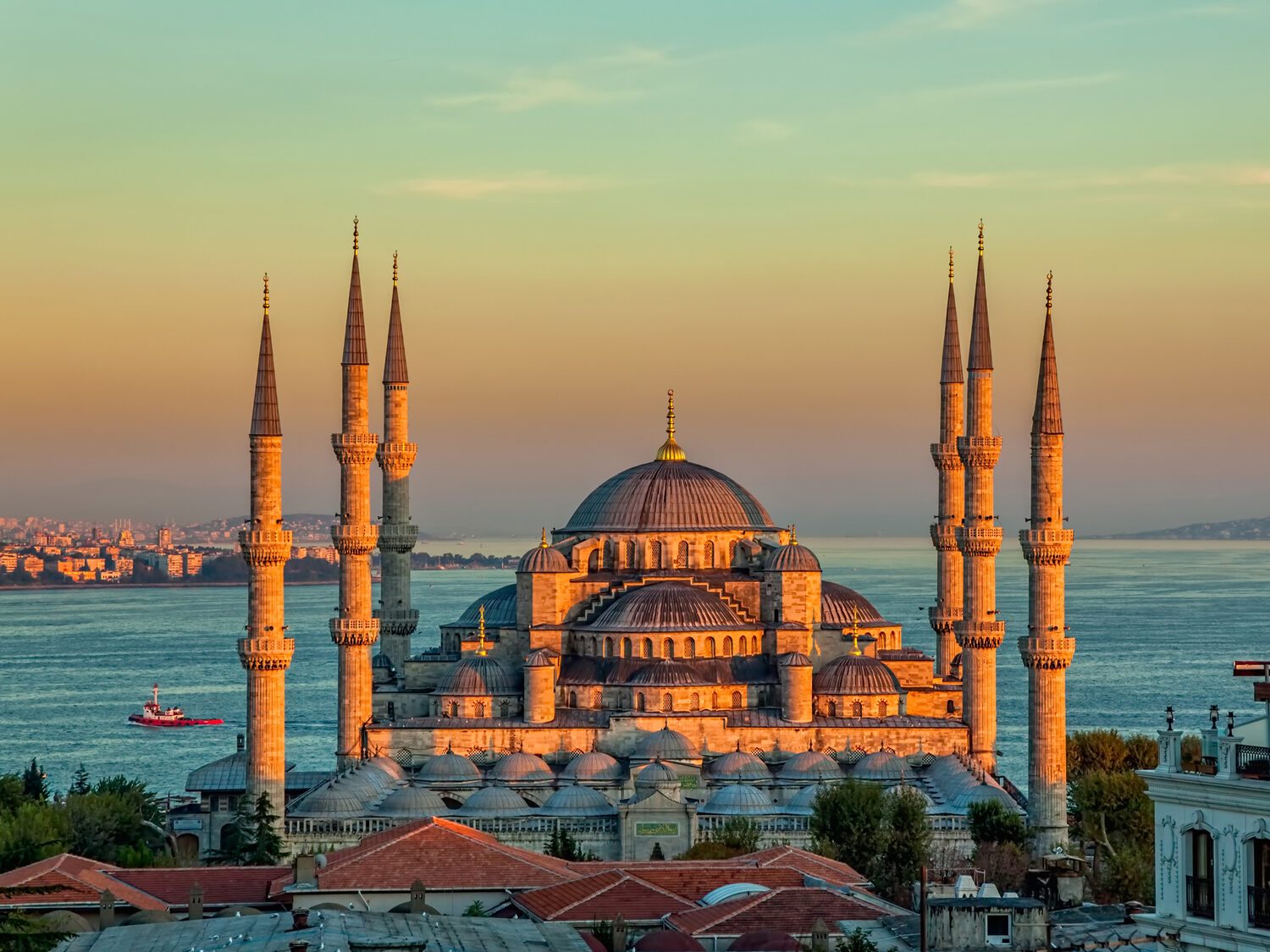
Istanbul is pleasant year-round, though winter can be cold and wet. Summer brings heat and cruise ship crowds to the old city. The Bosphorus breezes help, but expect lines at popular mosques and palaces.
The Mediterranean and Aegean coasts (Antalya, Bodrum, Fethiye) are best May through October for beach weather. July and August bring scorching heat and peak Russian/European tourist arrivals.
Cappadocia's hot air balloons fly year-round but spring and fall have the clearest conditions. Winter brings snow-dusted fairy chimneys - magical but some outdoor activities close.
Eastern Turkey is best visited June through September when high-altitude areas are accessible. Winters are harsh in places like Van and Mount Ararat region.
Cultural Notes
Turkish hospitality (misafirperverlik) is legendary and genuine. You may be invited to tea, dinner, or homes by strangers - this is cultural warmth, not a scam. Use judgment but don't assume the worst.
Turkey is a Muslim-majority secular republic - the balance between tradition and modernity varies by region. Istanbul's European side is cosmopolitan; central Anatolia is more conservative.
Atatürk (Turkey's founding father) is revered - don't mock or disrespect his image or legacy. His portrait is everywhere and criticism can cause offense or even legal issues.
Family and social obligations are paramount. Turks will ask personal questions (marriage, children, salary) that Westerners might find intrusive - it's friendliness, not rudeness.
Turkish baths (hamams) are a must-experience tradition. Choose a reputable historic hamam for the full experience - the process involves steaming, scrubbing, and massage.
Political topics require caution - Turkey has complex internal politics and regional tensions. Follow your host's lead and avoid strong opinions on Kurdish issues, Armenia, and current government.
Insider Tips
The Turkish Lira fluctuates significantly - this works in tourists' favor. Prices in tourist areas are often quoted in Euros or USD, but paying in Lira after checking exchange rates can save money.
Bargaining is expected in bazaars and with taxi drivers, but not in restaurants or shops with fixed prices. Start at 50% of the asking price and enjoy the theater of negotiation.
Download the Istanbul Kart app or get the transit card immediately - it works on all public transport and saves time and money. The metro, tram, and ferries are efficient.
Domestic flights with Turkish Airlines and Pegasus are affordable and save huge time given Turkey's size. Istanbul to Cappadocia is 1 hour by air versus 10+ by bus.
Turkish coffee and tea (çay) are cultural institutions. Tea is offered constantly and refusing repeatedly is impolite. Coffee grounds left in your cup can be 'read' for your fortune - a fun tradition.
Dress modestly when visiting mosques - covered shoulders and knees, women should cover hair. Many mosques provide coverings but bringing your own is easier.
Dress Code
Casual. Cover for mosques.
Current Travel Situation
United States to Turkey: What You Need to Know
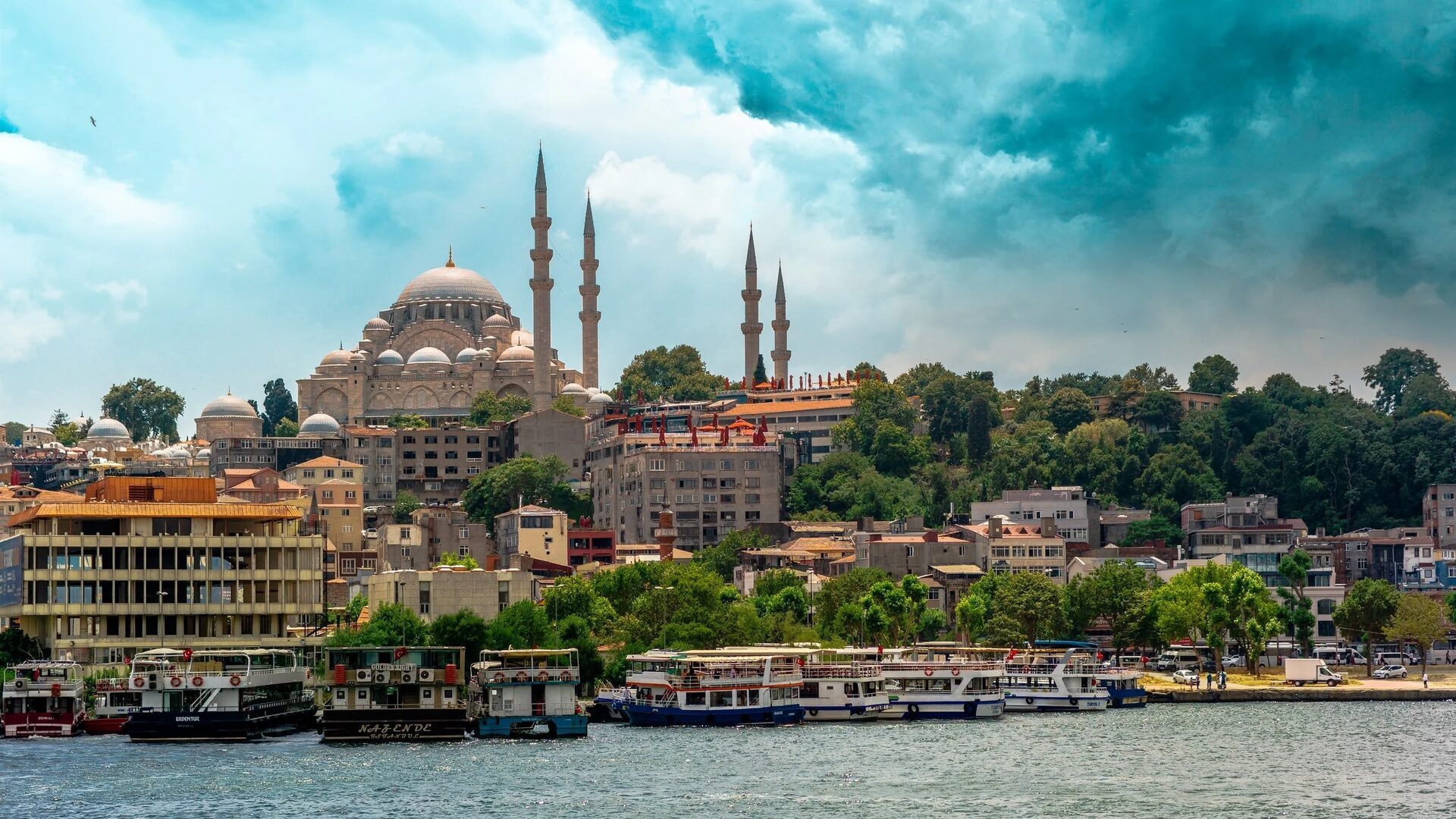
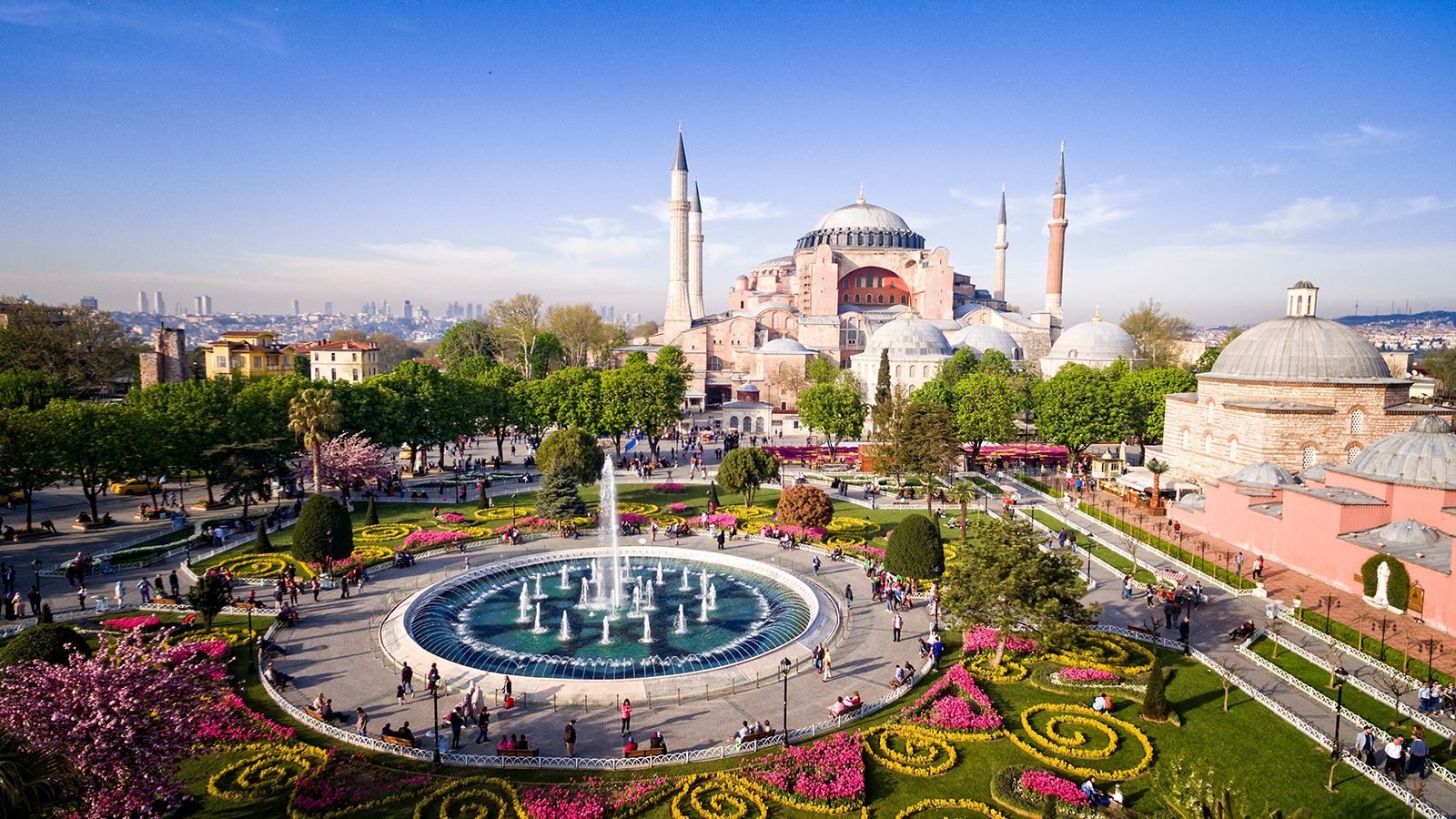
Turkey straddles two continents , Europe and Asia , and offers one of the world's great travel experiences combining ancient history (Ephesus, Troy, Hierapolis-Pamukkale), Byzantine and Ottoman heritage (Istanbul's Hagia Sophia, Blue Mosque, Topkapi Palace), stunning landscapes (Cappadocia's fairy chimneys and hot air balloons, the Turquoise Coast), and exceptional cuisine. Istanbul alone is one of the world's top 10 most visited cities. The US and Turkey have complex but important bilateral relations through NATO membership. The Turkish lira has experienced significant devaluation in recent years, making Turkey exceptionally affordable for USD holders.
How to Get There
Turkey's geographic position makes it an excellent hub. Istanbul is a natural transit point between Europe and Asia. Greece is accessible by ferry from Istanbul (Cesme to Chios) or from Bodrum/Kusadasi on the Aegean coast. Jordan (direct flights from Istanbul to Amman) and Georgia (direct flights from Istanbul to Tbilisi) are popular extensions. The Trans-Anatolia route by bus connects Istanbul with Ankara, Cappadocia, and Antalya. The Bodrum-Fethiye coastal road (D400) is one of the Mediterranean's great scenic drives.
Money & Banking
Turkey uses the Turkish lira (TRY). The lira has significantly weakened , it traded around 30-35 TRY per USD in 2023-2025. Turkey is now extremely affordable for Americans: a good restaurant dinner costs TRY 300-600 ($10-20 USD); midrange hotel rooms TRY 1,500-3,000/night ($50-100 USD). ATMs are widespread and Visa/Mastercard work well. Card payments are accepted in major hotels, restaurants, and tourist areas; cash preferred in markets and traditional bazaars.
Practical Tips
Istanbul's Hagia Sophia (recently re-converted to a mosque , dress appropriately, women cover hair), the Grand Bazaar (4,000 shops, excellent for haggling), and a Bosphorus cruise are essential Istanbul experiences. Cappadocia's hot air balloon flights (EUR 100-200 per person) are one of Turkey's most iconic experiences , book in advance through reputable operators. Pamukkale's white calcium terraces and ancient Hierapolis ruins are 3 hours from Antalya. Turkey drives on the right. Turkish cuisine is extraordinary , fresh bread, mezes, kebabs, baklava, and Turkish tea are integral to the experience.
Frequently Asked Questions
Do US citizens need a visa for Turkey?
Yes. US citizens require a Turkish e-Visa. Apply online at evisa.gov.tr for $50 USD. Approval is typically immediate. The e-Visa allows multiple entries and up to 90 days within any 180-day period.
Is Turkey safe for US tourists?
Major tourist areas (Istanbul, Cappadocia, Aegean and Mediterranean coasts) are generally safe and well-traveled. The US State Department currently rates Turkey at Level 2 (Exercise Increased Caution) due to terrorism concerns in border areas with Syria and Iraq. Standard tourist areas are fine for most travelers.
Is Turkey affordable for Americans?
Very much so. The Turkish lira's significant devaluation has made Turkey one of Europe/Middle East's best value destinations for USD holders. World-class meals, luxury hotels, and experiences cost a fraction of equivalent prices in Western Europe.
Can I visit the Hagia Sophia as a tourist?
Yes, but it is now an active mosque following its 2020 re-conversion from a museum. Non-Muslim visitors are welcome but must dress respectfully (women cover hair; both genders cover shoulders and legs) and visit outside prayer times. Entry is now free.