Thailand Visa RequirementsFor United States passport holders
US citizens can visit Thailand visa-free for up to 30 days on arrival (recently extended to 60 days in some cases , verify current policy). Thailand is Southeast Asia's most popular destination for Americans, offering world-class food, temples, beaches, and one of the best travel values in Asia.
Great news! United States passport holders can enter Thailand without a visa for tourism or business purposes. You can stay up to 30 days.
No advance visa application needed for the standard visa exemption. Arrive at Suvarnabhumi (BKK) or Don Mueang (DMK) airports in Bangkok, Phuket (HKT), Chiang Mai (CNX), or other international airports. Present your valid US passport, return or onward flight ticket, and show sufficient funds if asked ($20/person/day is the stated minimum). Immigration may ask for hotel bookings. A departure card (TM.6) must be completed , airlines often distribute these on the flight.
Entry Requirements
Passport Validity
6 months beyond date of entry
Blank Pages
2 blank pages required
Multiple Entry
Single entry only
Work Permitted
No - requires work visa
Entry Conditions
Passport valid 6+ months. Proof of onward travel. Sufficient funds may be checked.
Required Documents
Valid US Passport
Must be valid for at least 3-6 months beyond your planned departure date (varies by country)
Return or Onward Ticket
Proof of departure from the country, such as a return flight or onward travel booking
Proof of Accommodation Recommended
Hotel reservation, Airbnb booking, or address where you will be staying
Proof of Sufficient Funds Recommended
Credit cards, bank statements, or cash to cover expenses during your stay
Travel Insurance Recommended
Recommended for all international travel covering medical emergencies
Travel Essentials
Health & Safety
Safety Rating
Vaccinations
Hepatitis A & B, Typhoid, Japanese encephalitis (rural), Rabies, COVID-19.
Tap Water
Bottled water recommended
Safety Tips
Thailand is generally very safe for tourists. The main concerns are petty crime (bag snatching from motorbikes in cities), common tourist scams (gem stores, tuk-tuk tours, jet ski damage claims), and road safety. Use reputable taxi services or Grab. Avoid demonstrations, which occasionally occur in Bangkok. Some border areas have travel advisories.
Money & Costs
Currency
฿ Thai Baht (THB)
Daily Budget (USD)
Budget: $30 · Mid: $70 · Luxury: $180+
Cards & ATMs
Cards accepted in malls and hotels. Cash essential for street vendors and markets.
Tipping
Tipping is not traditionally Thai but has become expected in tourist areas. In restaurants, 10% is appreciated if service charge isn't included; otherwise, leaving the small change is sufficient. Tip massage therapists 50-100 baht, hotel porters 20-50 baht, and tour guides 10% of the tour cost. Round up taxi fares or add 20 baht for good service.
Practical Info
Power
Type A, B, C, O, 220V, 50Hz
Driving
Left side
Emergency
Emergency: 191
Tourist Police: 1155
Ambulance: 1669
Mobile/SIM
Buy a tourist SIM at the airport immediately upon arrival - booths from AIS, DTAC, and True are in the arrivals hall. Tourist packages with generous data (15-30GB) cost 300-600 baht for 8-15 days. Registration requires your passport. Coverage is excellent throughout the country. Alternatively, get an eSIM before arrival through providers like Airalo.
Getting There
Main Airports
Chiang Mai (CNX) · Bangkok (DMK) · Phuket (HKT) · Bangkok (BKK)
Airport Transfers
Suvarnabhumi (BKK): Airport Rail Link to downtown (45 baht, 30 minutes to Phaya Thai, then connect to BTS). Metered taxis from level 1 cost 300-500 baht plus tolls. Grab pickup from designated area. Don Mueang (DMK): A1/A2 buses to BTS Mo Chit (30 baht). Taxis cost 250-400 baht. For both airports, always use official taxi stands and insist on the meter.
Local Transport
Bangkok has excellent public transit: BTS Skytrain, MRT metro, and an extensive bus network. Grab is the dominant ride-hailing app and is safer than street taxis. Domestic flights are affordable - book on Air Asia, Nok Air, or Thai Lion Air. Intercity buses range from basic to VIP sleepers. Trains are scenic but slow. Songthaews and tuk-tuks are fun for short trips.
Culture & Travel Tips
Best Time to Visit
Thailand has three seasons: cool (November-February), hot (March-May), and rainy (June-October). The cool season is generally best for most of the country - comfortable temperatures and minimal rain.
Bangkok and Central Thailand are pleasant November through February. March-May brings intense heat (95°F+/35°C+). The rainy season brings daily downpours but also lower prices and fewer crowds.
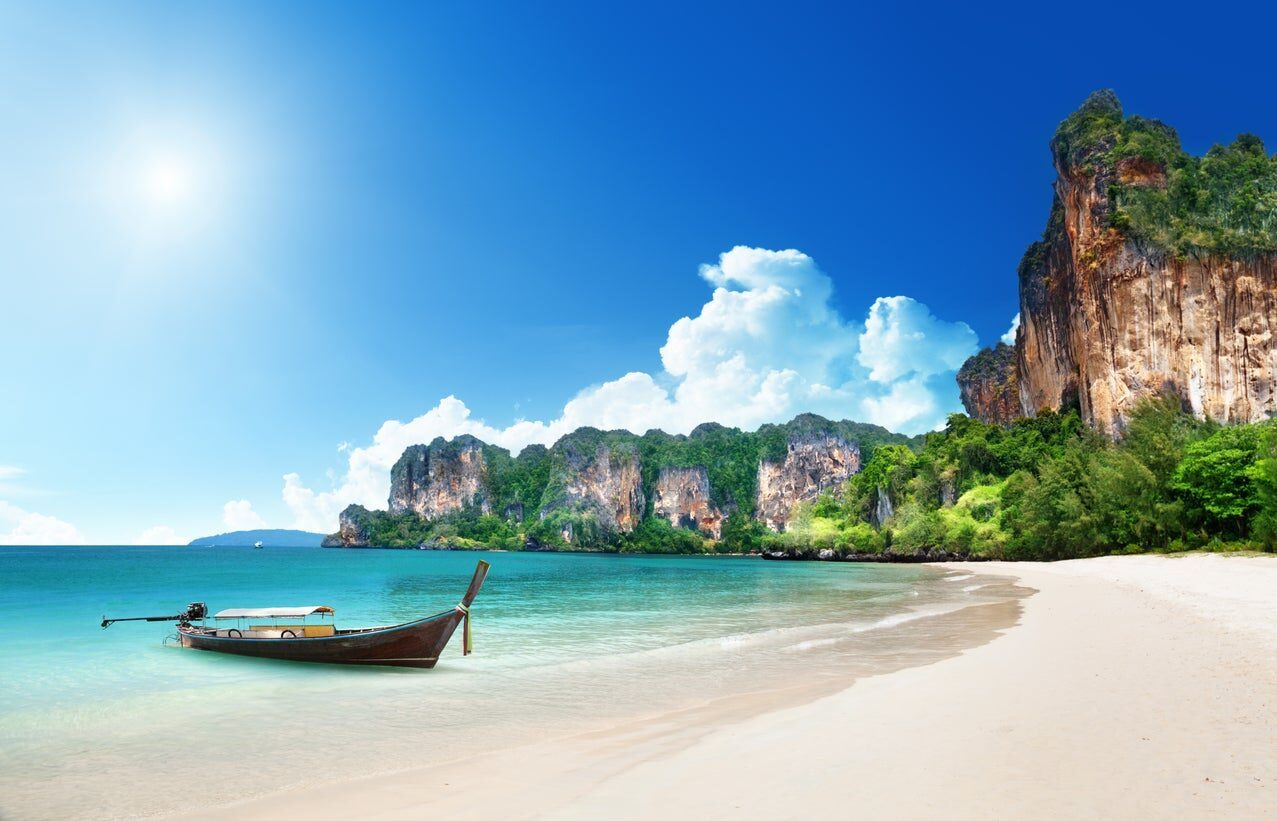
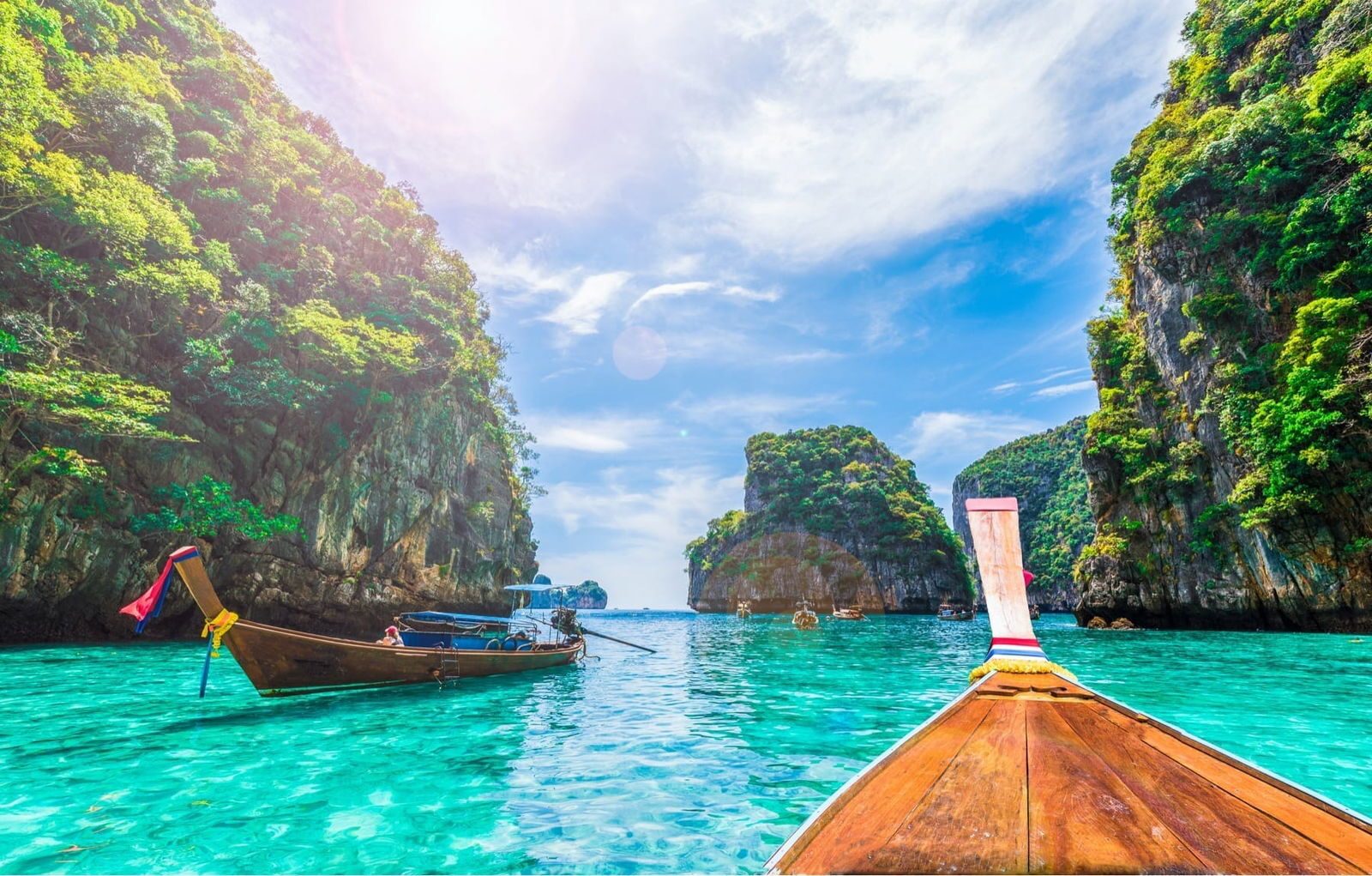
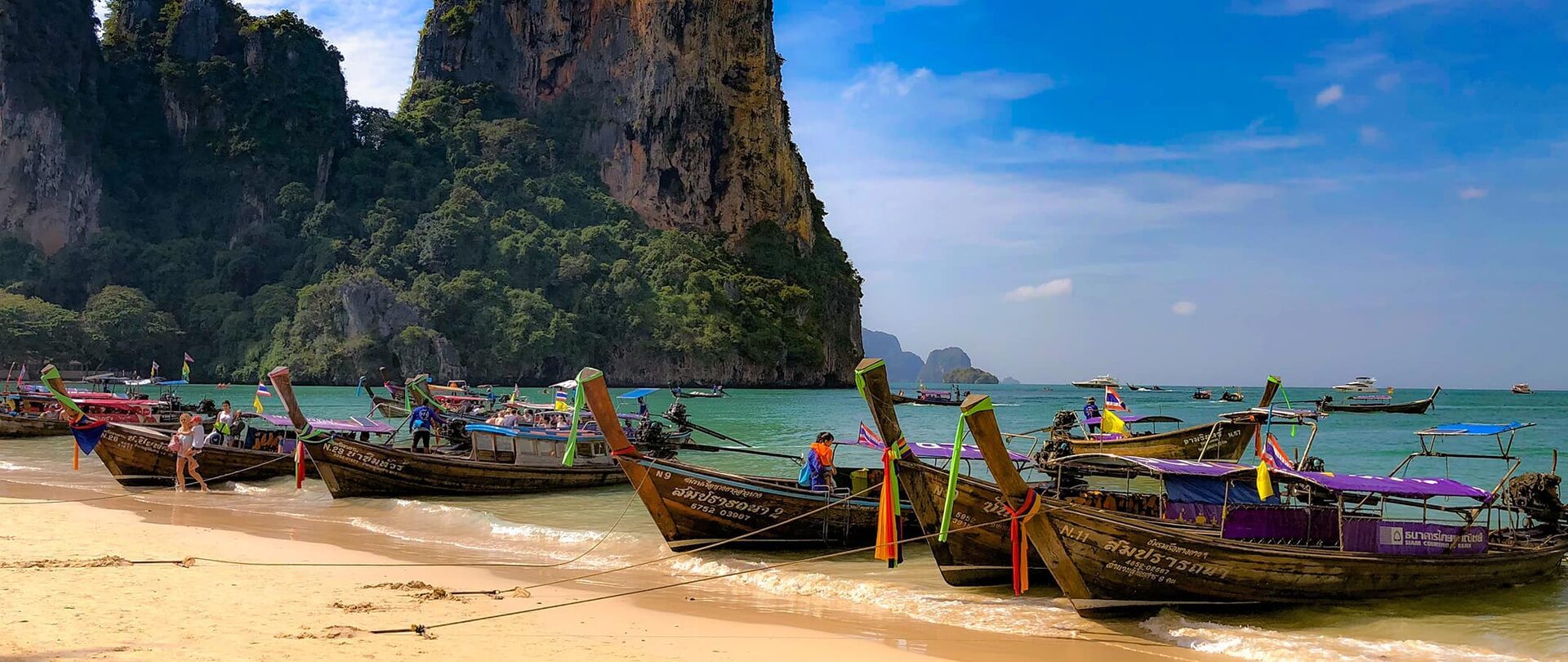
The beaches have different optimal times. The Gulf Coast (Koh Samui, Koh Tao) has its driest weather February through June - they receive rain when the Andaman Coast is dry. The Andaman Coast (Phuket, Krabi, Phi Phi) is best November through April when monsoons subside.
Northern Thailand (Chiang Mai, Chiang Rai) is best November through February for trekking and cool mountain air. The burning season (March-April) brings severe air quality issues from agricultural fires.
The islands vary - some shut down or reduce services during off-peak monsoon months. Check specific islands before booking.
Cultural Notes
The Thai King is revered and protected by strict lèse-majesté laws. Never criticize, mock, or damage images of the monarchy. Disrespect carries serious legal consequences.
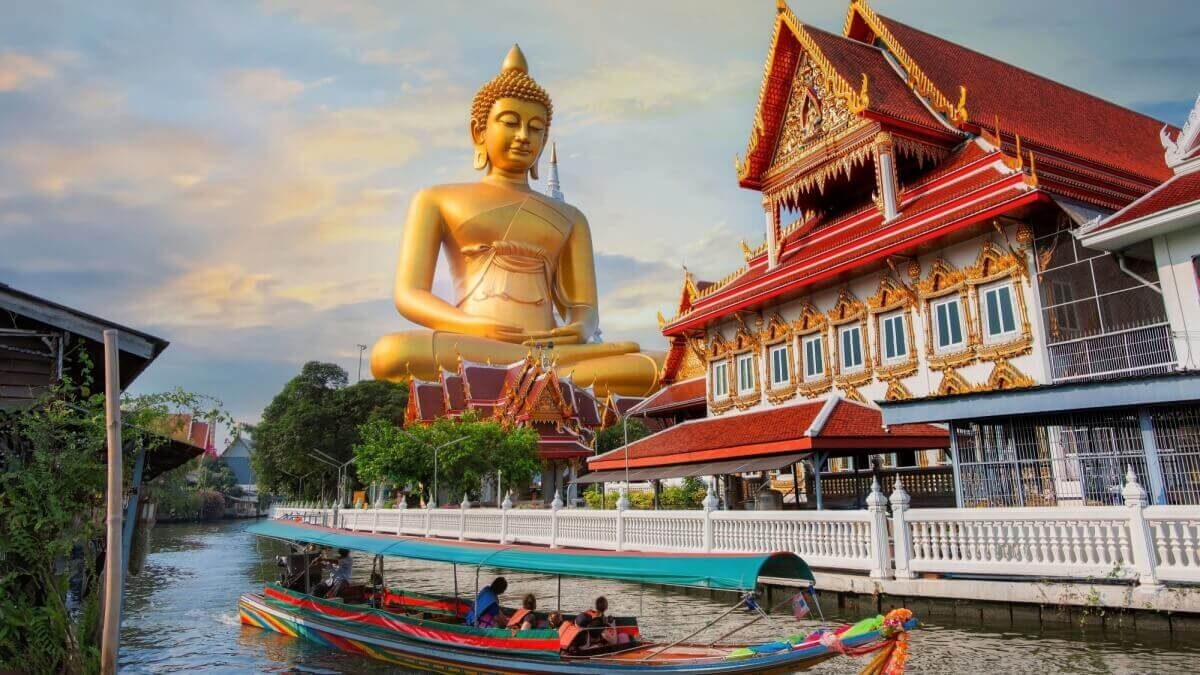
Buddhism shapes daily life - monks have elevated status, Buddha images are sacred (not decorations), and temples are places of worship first. Feet are low and heads are high - don't point feet at people or Buddha images.
'Saving face' is crucial - public confrontation or visible anger causes everyone to lose face. Stay calm even when frustrated. Smile, even when annoyed.
The wai (prayer-like greeting) has rules: younger/lower status initiates, hands higher shows more respect. When in doubt, return a wai you receive. Don't wai service workers (they wai you).
Thai people are genuinely friendly but the tourism industry means some interactions are transactional. Moving beyond tourist zones reveals authentic Thai warmth.
LGBTQ+ travelers are generally welcome - Thailand has visible gay culture, particularly in Bangkok and tourist areas. However, legal protections lag behind social acceptance.
Insider Tips
The Thai Baht is relatively stable. ATMs are everywhere but charge 220 THB per withdrawal - withdraw larger amounts less frequently. Cards work in malls and tourist areas; cash is needed elsewhere.
Negotiate tuk-tuk and taxi fares before getting in - meters are often 'broken.' Grab (Southeast Asia's Uber) is reliable and shows prices upfront. BTS/MRT in Bangkok is excellent.
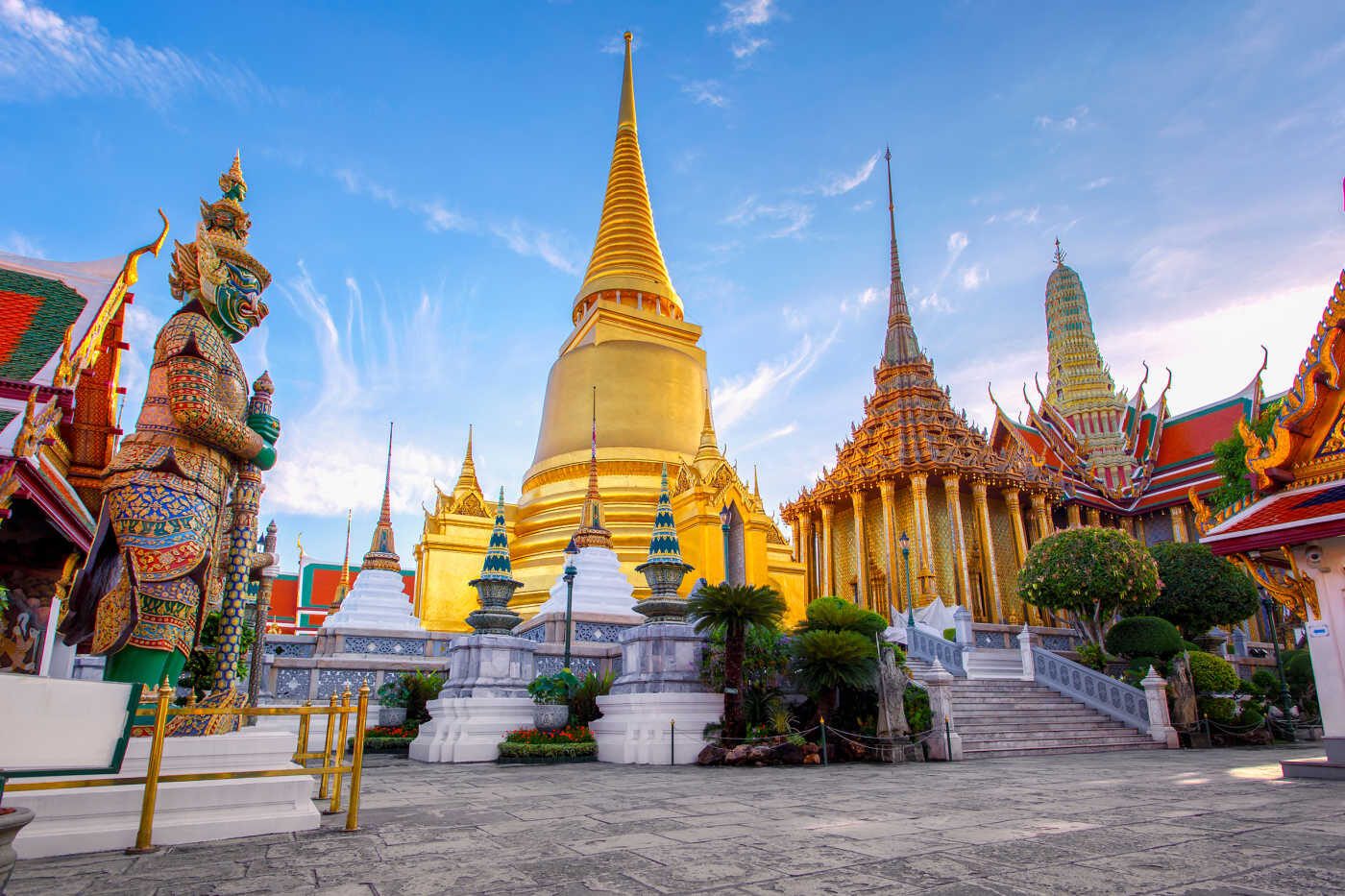
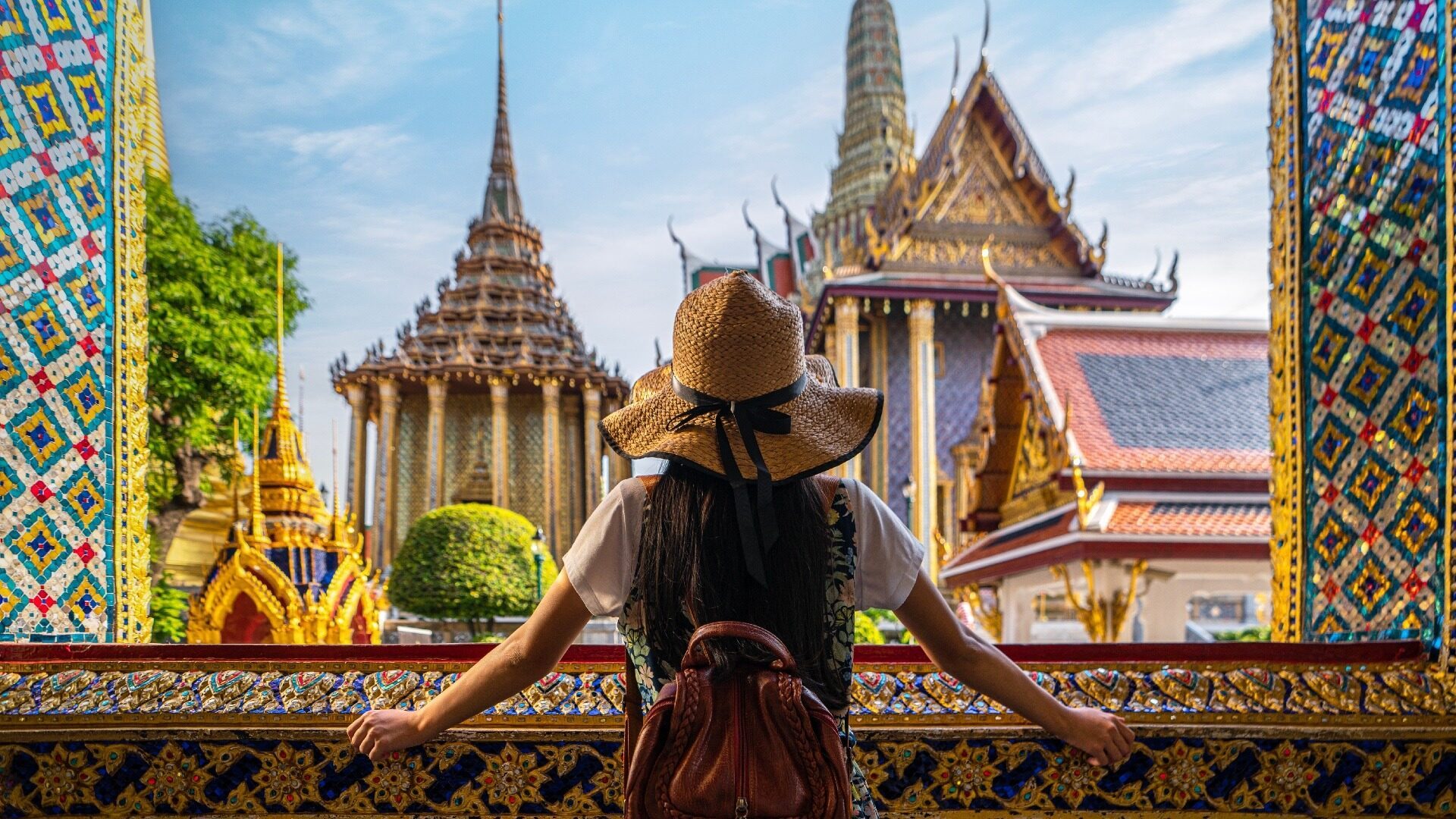
The Grand Palace and major temples require covered shoulders and knees - carry a scarf or sarong. Shoes come off when entering temples and homes.
Street food is generally safe at busy stalls - high turnover means fresh food. Point and order; vegetarian options exist but are less common than in Western countries.
Scams exist: gem shops, friendly strangers offering tours, tuk-tuk drivers with 'special deals.' Be skeptical of strangers who approach you. If it seems too good to be true, it is.
Pharmacies stock most medications without prescriptions and prices are low. Stock up on anything you might need.
Dress Code
Casual dress fine. Cover shoulders/knees at temples. No shorts at Grand Palace.
Current Travel Situation
United States to Thailand: What You Need to Know
Thailand has a visa exemption for US passport holders for tourism and short business visits. The standard exemption historically allowed 30 days, but Thailand has periodically extended it to 60 days. As of 2024, Thailand extended the visa-free period for many nationalities to 60 days , verify the current duration at the Thai Embassy or TAT (Tourism Authority of Thailand) website before travel, as policy can change. For stays longer than the visa-free allowance, apply for a Thailand Tourist Visa (TR) at a Thai consulate before departure.
How to Get There
Numerous US airlines and Asian carriers serve Bangkok. Delta, United, and American connect via Tokyo, Seoul, Hong Kong, or Taipei to Bangkok. From the West Coast to Bangkok is about 18–20 hours with a connection. Thai Airways, EVA Air (via Taipei), Korean Air (via Seoul), and Cathay Pacific (via Hong Kong) are popular options. Bangkok has two airports , Suvarnabhumi (BKK) handles most international flights; Don Mueang (DMK) handles many budget airlines.
Money & Banking
Thailand uses the Thai Baht (THB). ATMs are widely available everywhere. Credit cards accepted at larger hotels and malls; cash preferred at markets, street food stalls, and tuk-tuks. Exchange USD/EUR at Superrich or airport banks for competitive rates. Thailand is extraordinarily affordable for Americans , a comfortable mid-range trip costs $50–100/day including accommodation, meals, and transport. Luxury resorts cost more but are still cheaper than equivalent Western options.
Practical Tips
Thailand's highlights span its geography: Bangkok (Grand Palace, Wat Pho, Khao San Road, Chatuchak Market, floating markets), Chiang Mai (Doi Inthanon, Elephant Nature Park, night market, temple hopping), Northern Highlands (Pai, Chiang Rai), islands (Koh Samui, Koh Phangan, Koh Tao for diving, the Andaman coast , Phuket, Krabi, Koh Lanta, Koh Phi Phi), and ancient capitals (Ayutthaya, Sukhothai). Thai food alone , pad thai, green curry, som tum, mango sticky rice , is worth the trip.
Frequently Asked Questions
Do US citizens need a visa to visit Thailand?
US citizens can enter Thailand without a visa for tourism for up to 30 days if arriving by air. This is a visa exemption, not a visa on arrival. Your passport must be valid for at least 6 months from your entry date. You should be able to show proof of onward travel (a flight out of Thailand) and may be asked to demonstrate sufficient funds (20,000 THB per person or equivalent). For stays longer than 30 days, you can apply for a tourist visa at a Thai embassy or consulate before traveling.
Do US citizens need a visa for Thailand?
No. US passport holders receive a free visa exemption on arrival — typically 30 days, recently extended to 60 days in some cases. Verify the current duration on the Thai Embassy website before travel.
Can I extend my stay beyond 30 days in Thailand?
Yes, you can extend your visa-exempt stay once for an additional 30 days (total 60 days) by visiting a Thai Immigration office and paying a fee of 1,900 THB. Apply a few days before your current permission expires. Bring your passport, a passport photo, a copy of your passport and departure card, and the completed application form. The Bangkok Immigration office can be crowded, so arrive early. For longer stays, consider obtaining a 60-day tourist visa before arrival, which can also be extended once for 30 days.
How long can Americans stay in Thailand?
Currently 60 days on the visa exemption (as of 2024 policy updates — verify current rules). This can be extended for 30 days more at an immigration office inside Thailand. Border runs are possible but are increasingly discouraged for routine use.
Is it safe to travel in Thailand?
Thailand is generally very safe for tourists and welcomes millions of visitors annually. Petty crimes like pickpocketing and bag snatching occur in tourist areas and on public transport, especially in Bangkok. Be cautious of common scams targeting tourists, such as gem scams, tuk-tuk scams offering suspiciously cheap tours, and jet-ski damage scams in beach areas. Use reputable tour operators and licensed taxis or rideshare apps. The southern border provinces near Malaysia have travel advisories due to unrest and should be avoided. Thai people are generally friendly and helpful toward tourists.
What is the best season to visit Thailand?
November to March is the best weather: cool and dry. April–May is very hot (Songkran festival in April). June–October is rainy season — the south and islands get the most rain, though it rarely rains all day. Islands have different rainy seasons: the Gulf of Thailand coast is best November–April; the Andaman coast (Phuket) is best November–April too.
What should I know about Thai customs and etiquette?
Thai culture has important customs to respect. The Thai Royal Family is deeply revered, and disrespecting them (including defacing currency bearing the King's image) is illegal with severe penalties. Buddhism is central to Thai life. Dress modestly at temples (cover shoulders and knees), remove shoes before entering temple buildings or homes, and never touch or point your feet at Buddha images. The head is considered the highest part of the body (don't touch people's heads), and feet the lowest (don't point feet at people). The traditional greeting is the "wai" (palms together with a slight bow).
Is Thailand safe for American tourists?
Thailand is generally very safe for tourists. Petty theft and scams (taxi overcharging, gem scams) are the main concerns. Respecting Buddhist temples, dress codes, and the monarchy (criticizing the King is illegal and seriously prosecuted) is essential.
How much does it cost to visit Thailand from the US?
Thailand is one of the world's best travel values. Budget travelers can live comfortably on $30–50/day; mid-range travel (guesthouses, local restaurants, activities) costs $60–100/day. Flights from the US are typically $600–1,200 round trip.