Cambodia Visa RequirementsFor United States passport holders
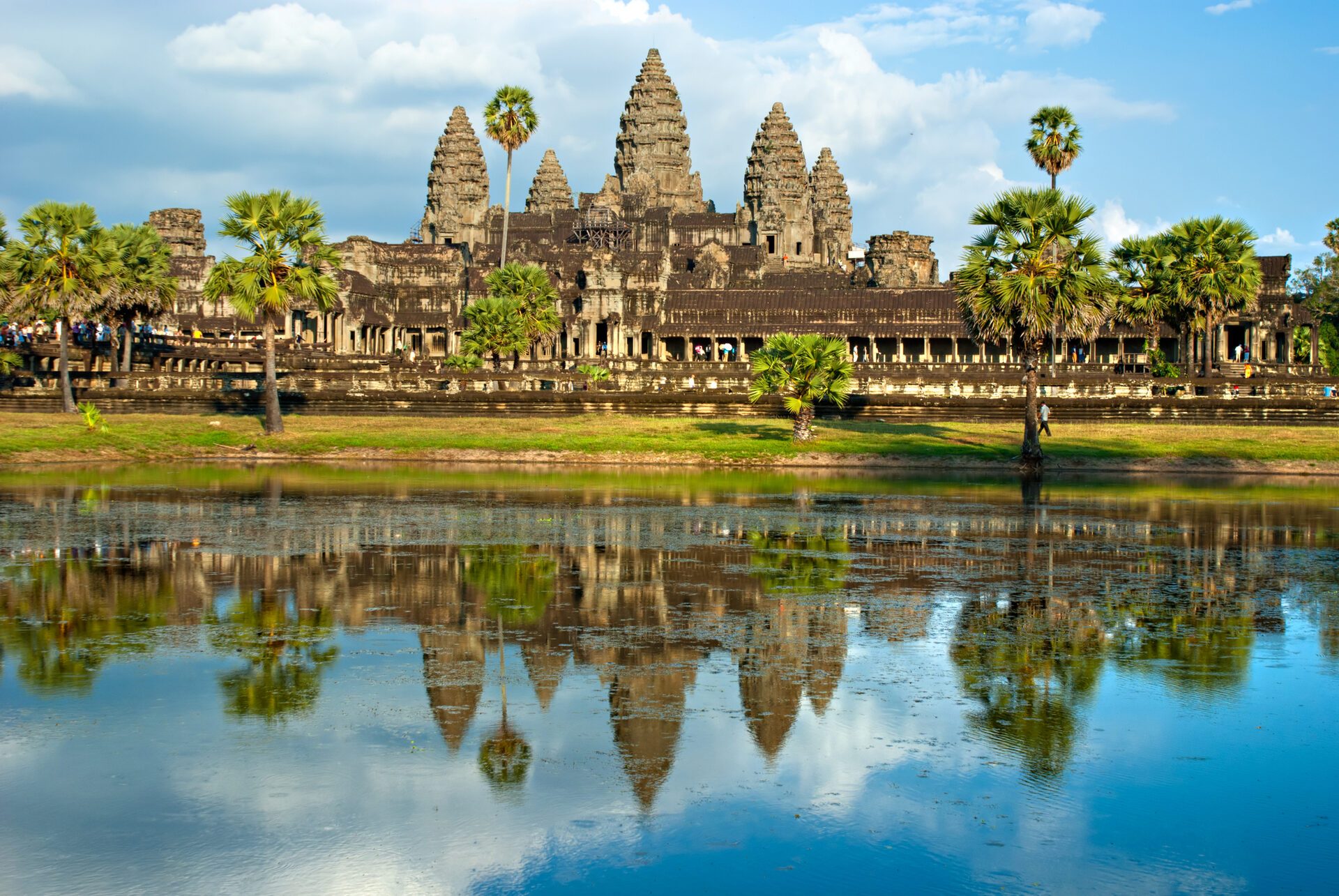
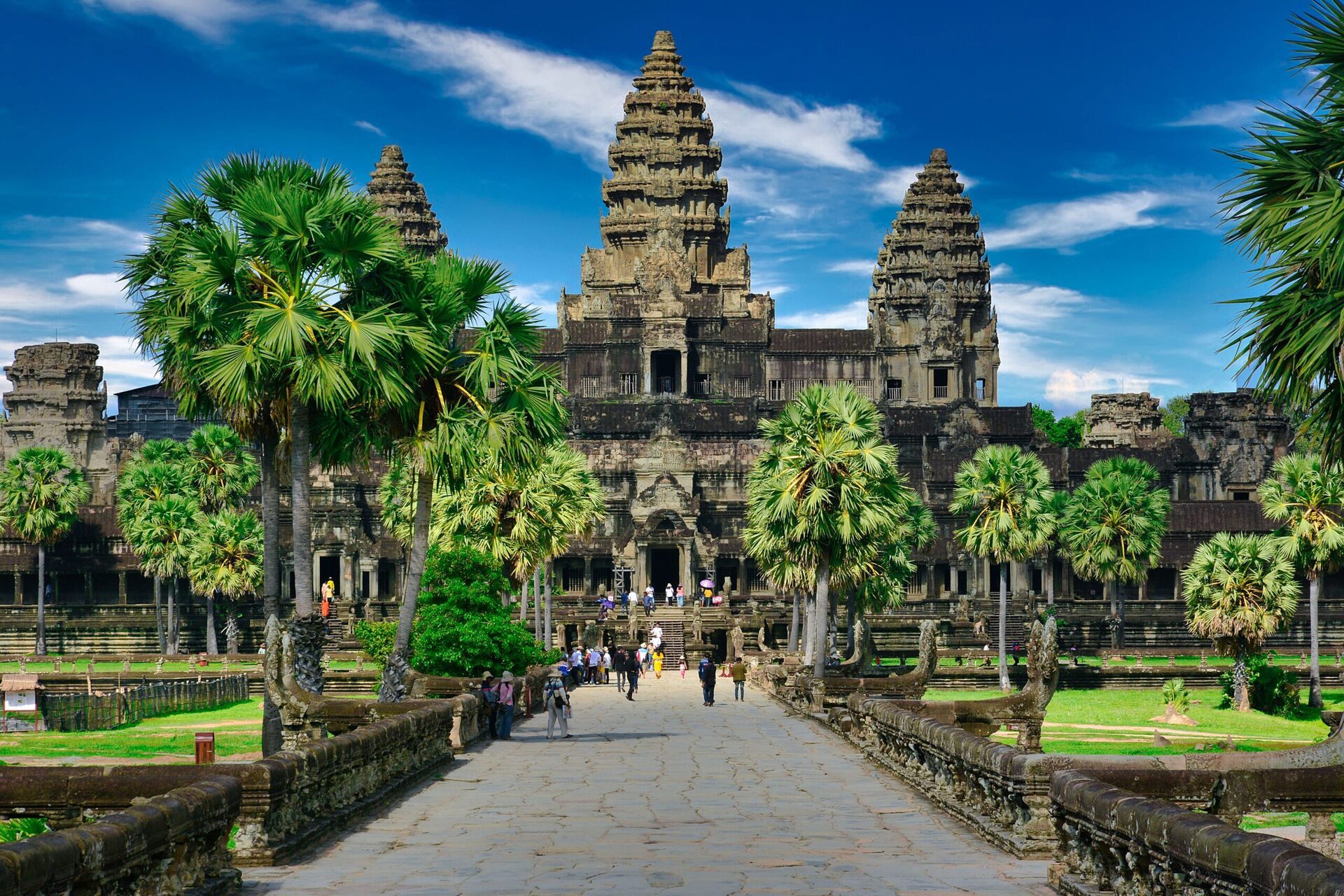
American citizens need a visa to visit Cambodia, obtainable as an eVisa online or on arrival at major entry points. The Cambodia eVisa costs $36 USD and allows a single-entry stay of up to 30 days. Cambodia is home to Angkor Wat, the world's largest religious monument and Southeast Asia's greatest archaeological site, as well as a haunting history of the Khmer Rouge genocide and a rapidly developing beach scene on the Gulf of Thailand.
United States passport holders must apply for an electronic visa (eVisa) online before traveling to Cambodia.
Americans can apply for a Cambodia eVisa online at evisa.gov.kh before travel ($36 USD, 3 business days processing). Visa on arrival is also available at Phnom Penh (PNH) and Siem Reap (REP) international airports ($30 USD, bring a passport photo). Required for eVisa: valid US passport (minimum 6 months validity), passport photo, travel dates, and accommodation address. The standard tourist visa allows 30 days. Extensions are available at the immigration office in Phnom Penh for additional 30-day periods.
Entry Requirements
Passport Validity
6 months beyond date of entry
Blank Pages
1 blank page required
Multiple Entry
Single entry only
Work Permitted
No - requires work visa
Entry Conditions
Passport valid for at least 6 months with at least one blank page. One passport-sized photo required for visa on arrival. Return/onward ticket may be requested.
Overstay fine of $10 per day. Extended overstays may result in detention and deportation ban.
Required Documents
For Your Visa Application
Valid US passport (minimum 6 months validity)
Digital passport photo
Travel dates and accommodation address
Required at Entry
Valid US Passport
Must be valid for at least 6 months beyond your planned arrival date with at least one blank page
Printed Cambodia eVisa approval (or visa on arrival fee $30 USD cash)
Digital Passport Photo
Recent color photo in JPEG format meeting specific size requirements (usually 35x45mm, 600x600 pixels)
Valid US passport
Completed Online Application
Fill out the official eVisa application form on the government portal
Travel Itinerary
Detailed travel plans including dates and places you intend to visit
Proof of Accommodation
Hotel bookings, Airbnb reservations, or host invitation letter
Return or Onward Flight
Confirmed flight booking showing departure from the country
Proof of Sufficient Funds Recommended
Bank statements or credit card showing adequate funds for your stay
Travel Insurance Recommended
Recommended coverage for medical emergencies and trip cancellation
Travel Essentials
Health & Safety
Safety Rating
Vaccinations
Hepatitis A/B, typhoid, malaria (rural areas), rabies.
Tap Water
Bottled water recommended
Safety Tips
Cambodia is generally safe. Bag snatching occurs in cities - keep valuables secure. Avoid political gatherings. Mine-affected areas exist in remote regions.
Money & Costs
Currency
៛ Cambodian Riel (KHR)
Daily Budget (USD)
Budget: $25 · Mid: $60 · Luxury: $200+
Tipping
Tip 10% in restaurants. Tip tuk-tuk drivers and guides.
Practical Info
Power
Type A, C, G, 230V
Driving
Right side
Emergency
117 (police), 118 (fire), 119 (ambulance)
Getting There
Main Airports
Phnom Penh (PNH) · Siem Reap (REP)
Culture & Travel Tips
Best Time to Visit
Cambodia has a tropical monsoon climate with distinct wet and dry seasons. The dry season from November to April is ideal for visiting Angkor Wat and other temples - December through February offers the most comfortable conditions with lower humidity and pleasant temperatures. The wet season (May-October) brings daily afternoon downpours but also lush green landscapes, spectacular moats around Angkor temples, and fewer tourists. Tonle Sap Lake is best visited from September to November when water levels are high and fishing villages are most accessible. The Khmer New Year in mid-April brings festive celebrations but extreme heat.
Cultural Notes
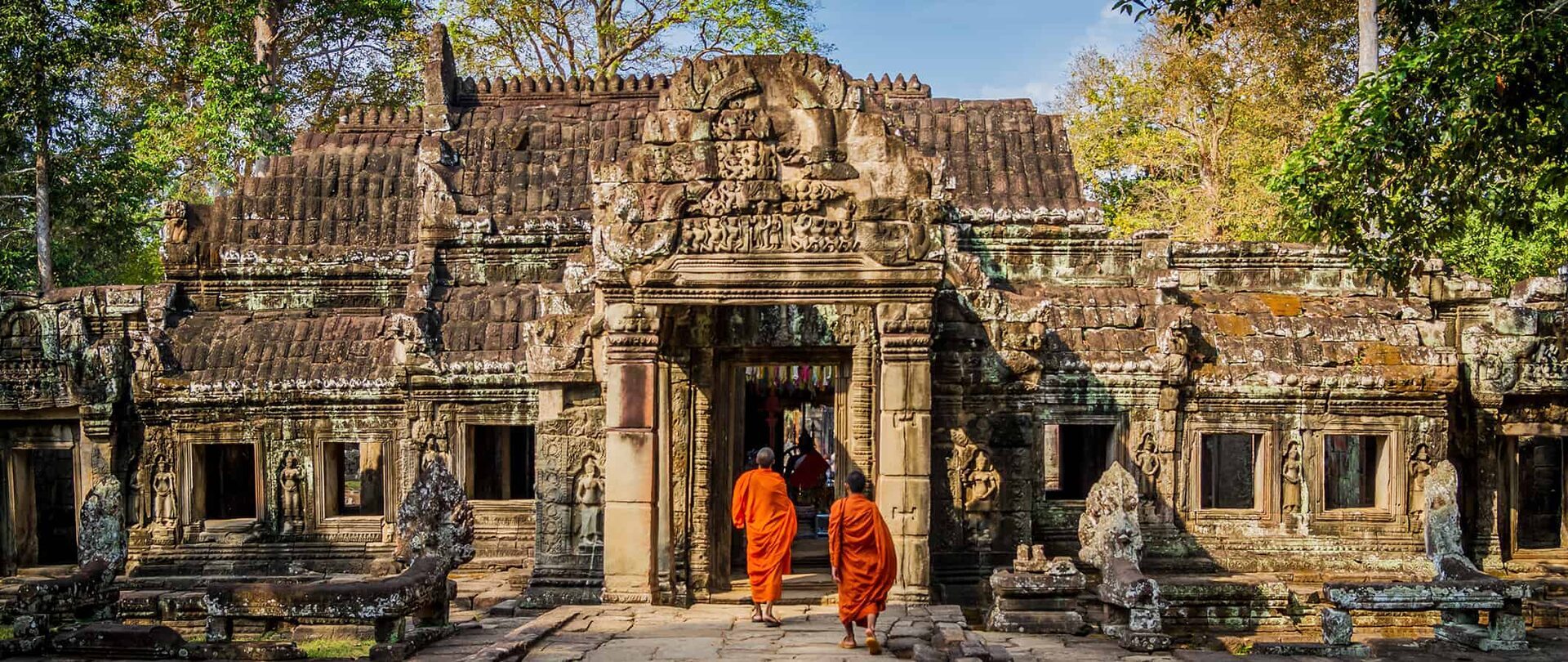
Cambodia is recovering from the Khmer Rouge genocide (1975-1979) that killed nearly a quarter of the population. This trauma remains present - many older Cambodians lost family members, and discussions can be sensitive. The Angkorian empire that built the temples represents a source of profound pride and national identity. Buddhism shapes daily life, with morning alms rounds visible in towns. Cambodians are resilient and generally welcoming despite their history. Modest dress is expected at temples. The monarchy is revered; disrespect is a serious offense. Traditional apsara dance preserves ancient court traditions. Economic development is rapid but inequality is visible. Child protection concerns mean responsible tourism is important.
Insider Tips
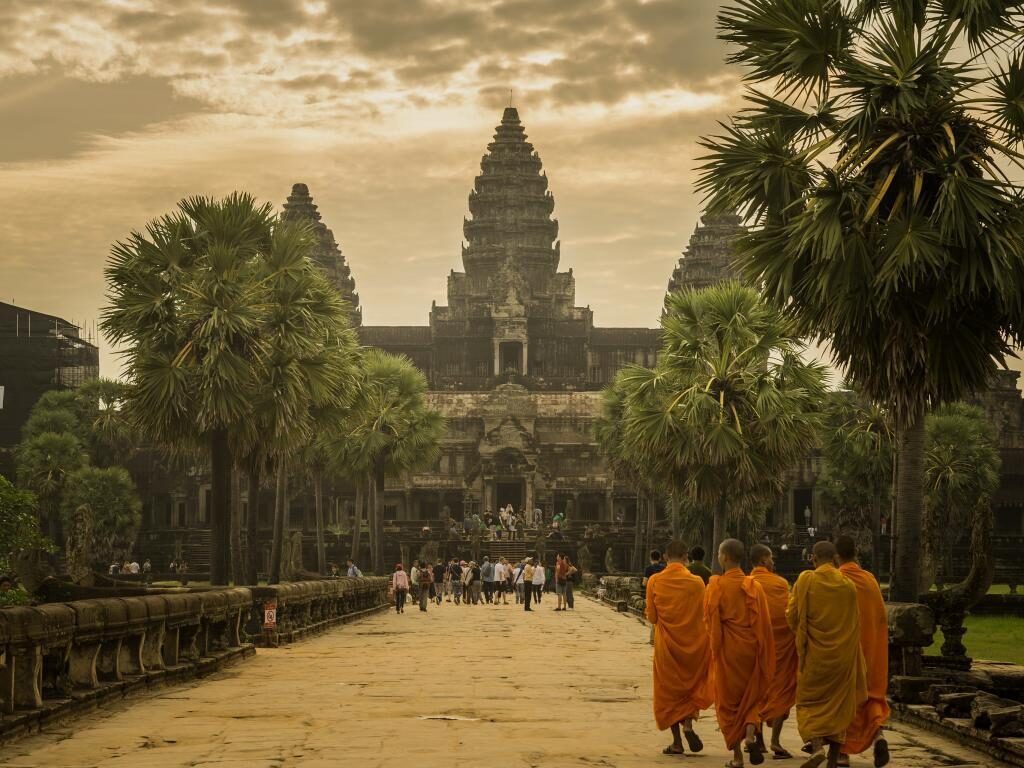
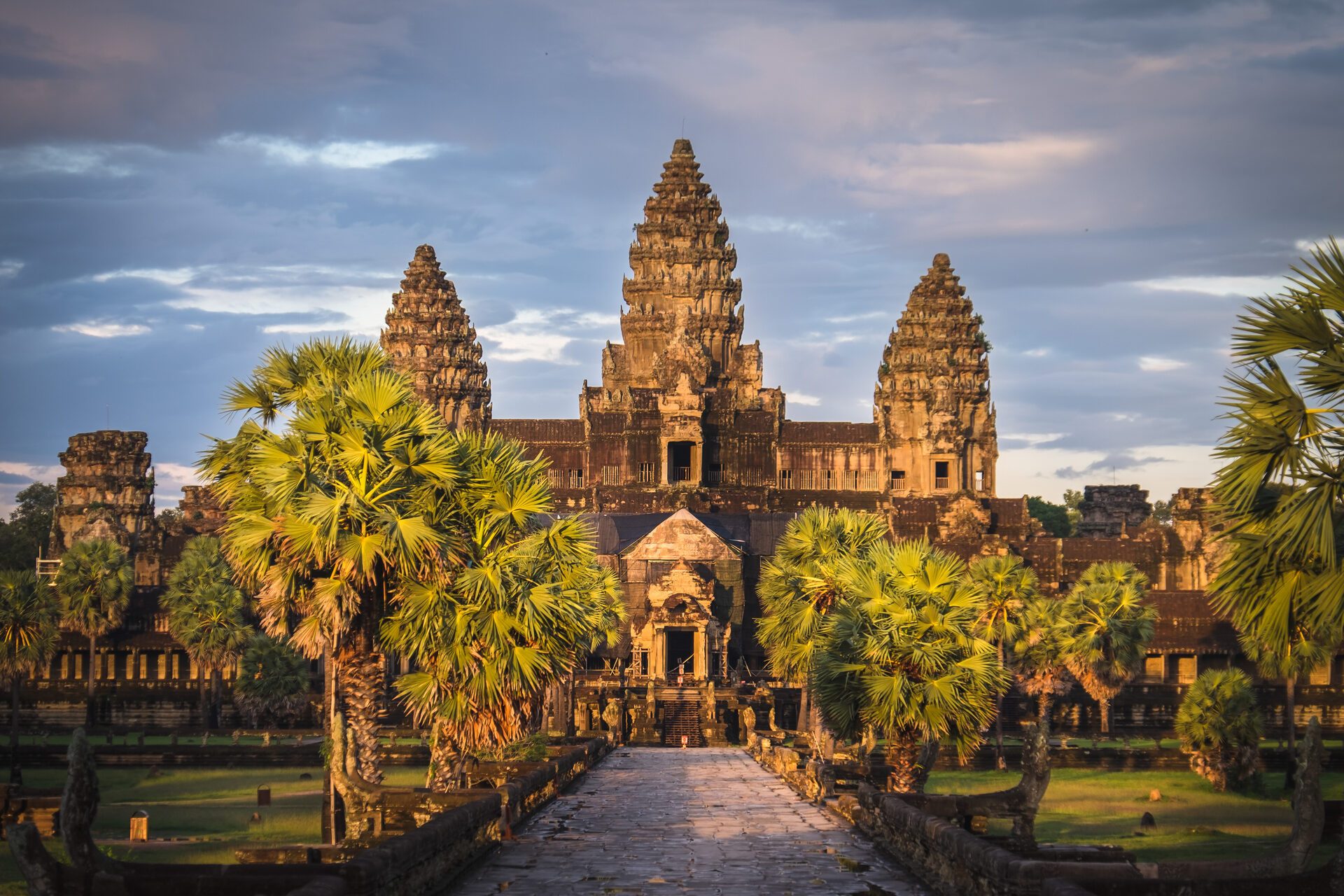
Cambodia centerpiece is Angkor, the vast temple complex that rivals any ancient site on Earth. Angkor Wat, the worlds largest religious monument, justifies the trip alone, but the jungle-covered Ta Prohm and the faces of Bayon extend the wonder. Buy temple passes for at least three days; sunrise at Angkor Wat is unmissable. Siem Reap serves as the base with excellent restaurants and night markets. Phnom Penh, the capital, has the sobering Tuol Sleng Genocide Museum and Killing Fields - essential for understanding Cambodia. Beach resorts are developing at Sihanoukville and Koh Rong. The US dollar is effectively co-currency with the riel. Tuk-tuks are the transport of choice. Try fish amok, the national dish.
Current Travel Situation
United States to Cambodia: What You Need to Know
Cambodia is one of Southeast Asia's most culturally compelling destinations. The Khmer Empire (9th-15th centuries) produced the extraordinary temple complex of Angkor Wat, a monument so significant it appears on the Cambodian national flag, and dozens of other temple ruins spread across the Angkor Archaeological Park. Cambodia's recent history is shaped by the Khmer Rouge genocide (1975-1979), in which approximately 1.7-2 million people died under Pol Pot's regime. The Tuol Sleng Genocide Museum in Phnom Penh and the Killing Fields of Choeung Ek are essential for understanding this history. For Americans, Cambodia is an affordable, fascinating, and increasingly comfortable destination; the Angkor temples alone justify a trip to Southeast Asia.
How to Get There
No direct US-Cambodia flights exist. Connect to Siem Reap (REP) or Phnom Penh (PNH) via Bangkok (Thai, Bangkok Airways, AirAsia), Ho Chi Minh City (Vietnam Airlines), Singapore (Silk Air, Scoot), Kuala Lumpur (Malaysia Airlines, AirAsia), or Hong Kong (Cathay). Bangkok is the most common connection point; many travelers combine Thailand and Cambodia in one trip. Siem Reap is the airport for Angkor Wat; Phnom Penh is the capital. Flight time from Bangkok to Siem Reap is approximately 1 hour.
Money & Banking
Cambodia uses the US dollar (USD) as its primary currency alongside the Cambodian riel (KHR). All prices, ATMs, and transactions are effectively in USD; you will rarely need to use riel. This makes Cambodia extremely convenient for Americans. Cambodia is very affordable: budget $40-80 USD per day for comfortable travel including guesthouse accommodation, meals, and tuk-tuk transport. Angkor Archaeological Park entry: $37/day or $62/3 days or $72/7 days (purchased at the park ticket office in USD). Meals at local restaurants: $3-8 per person.
Practical Tips
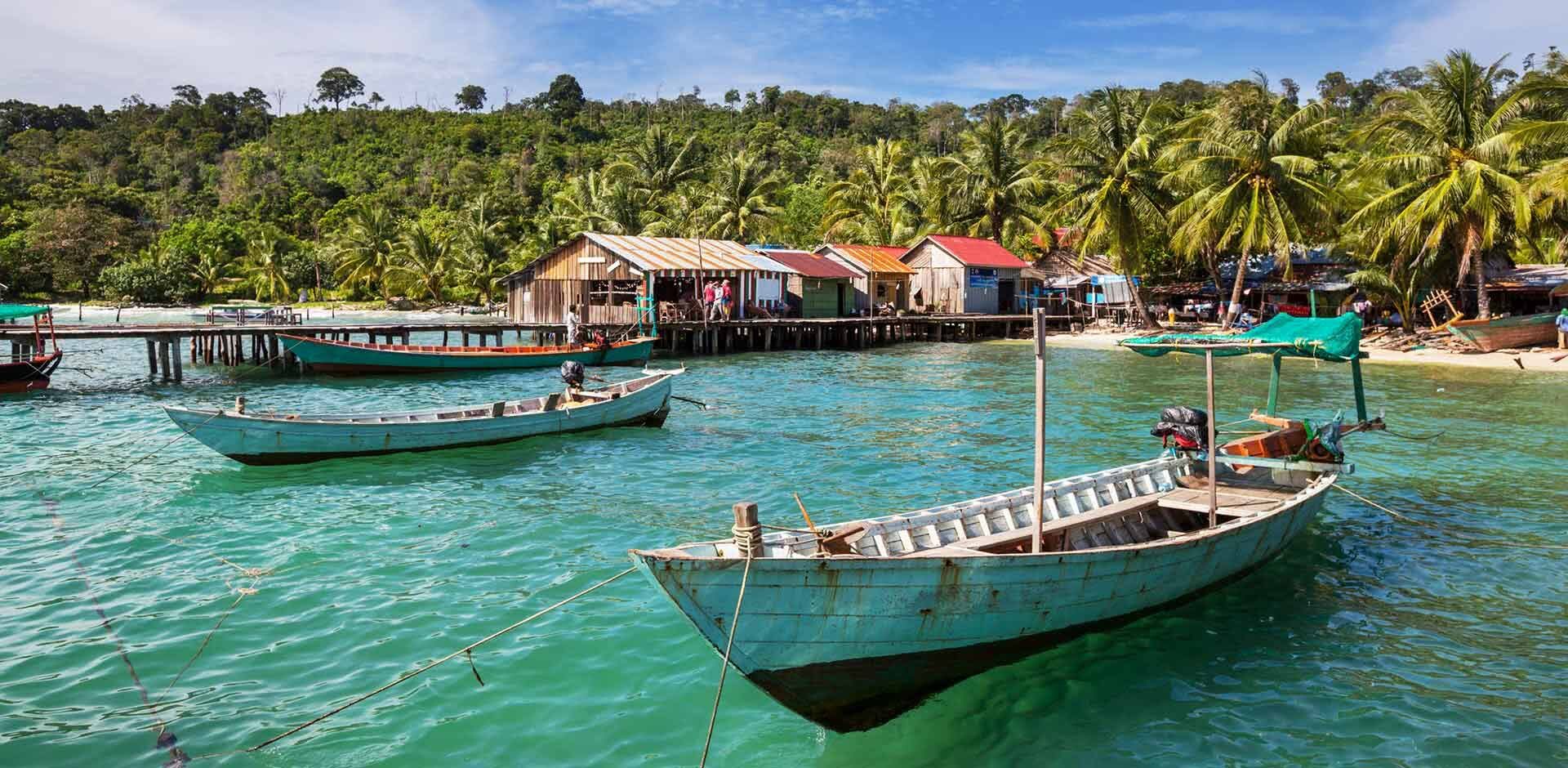
Angkor Archaeological Park: Angkor Wat (the main temple, best at sunrise from the reflecting pond), Angkor Thom (the Bayon temple with massive stone faces), Ta Prohm (the jungle-overgrown temple featured in Tomb Raider), Preah Khan, and the Baphuon. The Angkor complex covers 400 sq km and contains hundreds of temples. A 3-day pass allows thorough exploration. Phnom Penh: the Tuol Sleng Genocide Museum (former Khmer Rouge prison/torture facility) and Choeung Ek Killing Fields are somber but essential historical visits. The Royal Palace and Silver Pagoda, the National Museum, and the riverfront evening food market. Sihanoukville coast: Otres Beach for beach days, and the islands of Koh Rong and Koh Rong Samloem for pristine beaches and diving. Kampot: charming riverside town, pepper plantations, and Bokor Mountain.
Frequently Asked Questions
Do US citizens need a visa to visit Cambodia?
Yes, US citizens need a visa for Cambodia, but it's easy to obtain. You can apply online for an e-Visa ($36, takes about 3 business days) through evisa.gov.kh, or get a visa on arrival ($30 plus possible processing fees) at major airports and land borders. The e-Visa is recommended for faster processing and fewer hassles. Both options grant a 30-day single-entry tourist visa. You'll need a passport valid for 6 months and one passport photo for visa on arrival.
Do US citizens need a visa for Cambodia?
Yes. Americans need a visa for Cambodia -- either an eVisa ($36, applied at evisa.gov.kh) or visa on arrival at the airport ($30 cash). Both allow 30 days. The eVisa is simpler and avoids airport queues. Apply at least a week before travel.
How much does an Angkor Wat pass cost and how should I plan my visit?
Angkor Archaeological Park passes cost: 1 day ($37), 3 days ($62, valid for 10 days), or 7 days ($72, valid for 1 month). Buy passes at the official ticket office; photos are taken on-site. For first-time visitors, a 3-day pass allows comfortable exploration of main temples without rushing. Must-sees include Angkor Wat (arrive at sunrise), Bayon Temple with its face towers, and Ta Prohm (the "Tomb Raider" temple). Hire a licensed guide ($30-50/day) for historical context. Start early to beat heat and crowds. Dress modestly (covered shoulders and knees) or you'll be refused entry.
How much does Angkor Wat cost to visit?
Angkor Archaeological Park tickets: $37/day, $62/3 consecutive days, or $72/7 consecutive days (purchased in USD at the park ticket office). Most visitors spend 2-3 days to see the main temples. Sunrise entry to Angkor Wat requires being at the ticket office by 5 AM.
Is Cambodia safe and what about landmines?
Cambodia is generally very safe for tourists. The main concerns are petty theft (especially bag snatching by motorcycle in cities) and traffic accidents. Regarding landmines: While Cambodia was heavily mined during decades of conflict, tourist areas, cities, and well-traveled paths are completely safe and cleared. Danger exists only in remote rural areas, particularly near the Thai border. Never walk in unmarked countryside areas, stick to established paths, and don't touch any unknown metal objects. At Angkor and all major tourist sites, there is zero landmine risk.
Can I combine Cambodia with Thailand or Vietnam in one trip?
Yes -- a Thailand-Cambodia-Vietnam combination is a classic Southeast Asia trip. Bangkok to Siem Reap: fly 1 hour or overland via Poipet (5-7 hours by bus). Siem Reap/Phnom Penh to Ho Chi Minh City: direct bus 5-7 hours or fly 1 hour. The Southeast Asia backpacker trail makes all these countries easy to combine.
What currency should I use in Cambodia?
Cambodia has a unique dual-currency system using both US Dollars (USD) and Cambodian Riel (KHR). US dollars are widely accepted everywhere, and ATMs dispense dollars. Prices at hotels, restaurants, and tourist services are typically quoted in USD. Riel is used for small purchases under $1 and as change (approximately 4,000 Riel = $1). Carry small USD bills ($1, $5, $10) as change can be limited. Damaged, torn, or heavily worn US bills may be refused. Credit cards are accepted at upscale establishments but cash remains king for most transactions.